What Your Chart of Accounts Really Reveals About Your Business

Posted on  
June 29, 2026
Share this article
What Your Chart of Accounts Really Reveals About Your Business

Manybusiness owners think of a chart of accounts as a tool reserved foraccountants. In reality, it's one of the most revealing documents about thehealth and structure of a business. Knowing how to read it, even at a basiclevel, changes the way an entrepreneur understands their own numbers.

What Is a Chart of Accounts

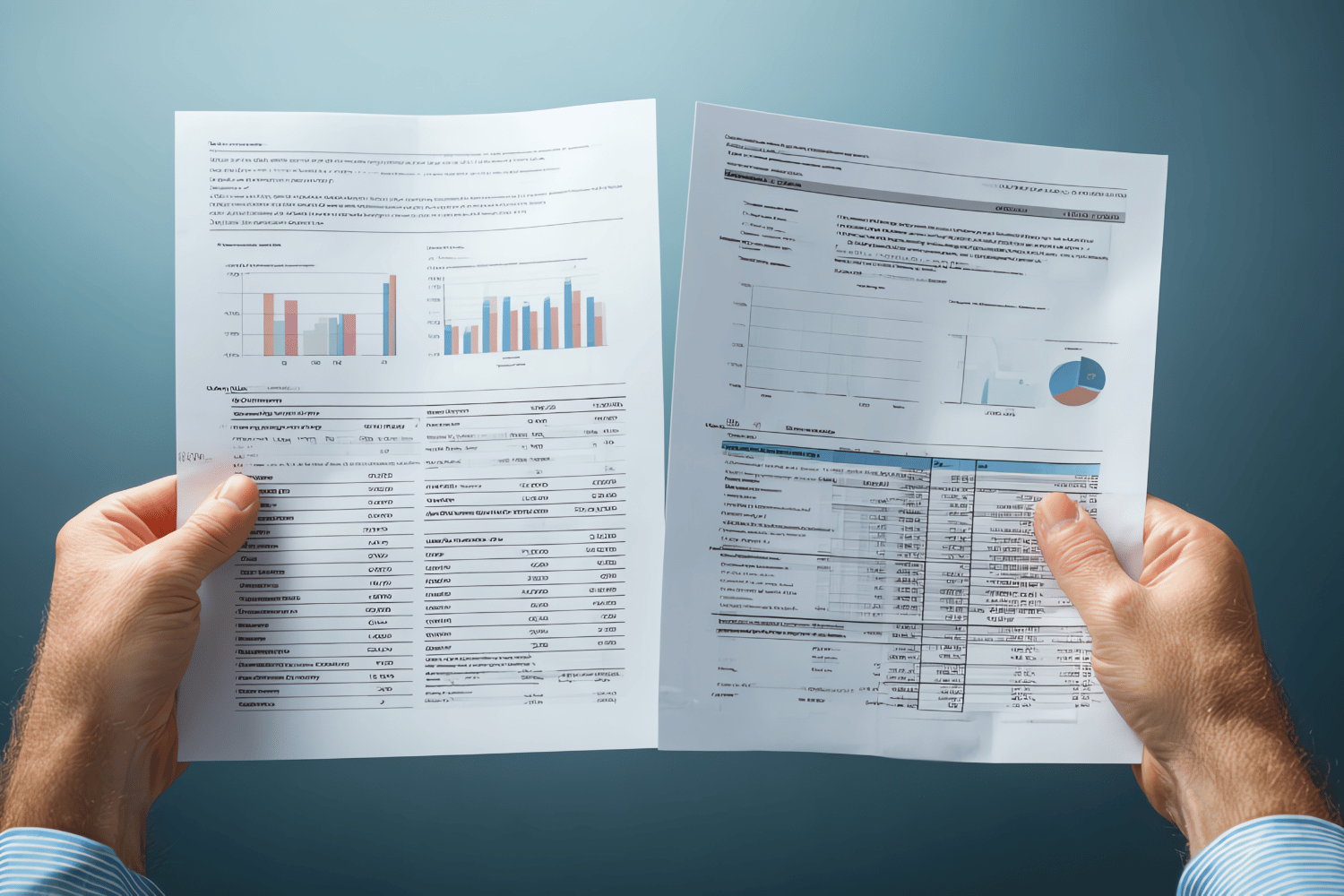
A chart of accounts is a structured list of all the accounts used to record a business's financial transactions. Each account has a name and a number, which allows every transaction to be classified into the right category. It's essentially the skeleton that supports the entire accounting structure of the business.

It's important to distinguish a chart of accounts from a general ledger. The chart of accounts is the list of available accounts — it's the structure. The general ledger, on the other hand, contains the details of every transaction recorded in each of those accounts — it's the content. One defines the categories, the other fills them in.

Every business adapts its chart of accounts to its activities and needs. A construction company won't have the same accounts as a professional services firm. That said, all businesses rely on the same universal categories: assets, liabilities, equity, revenue, and expenses. In Quebec, a chart of accounts also includes specific accounts for the GST and QST. It also covers source deductions such as contributions to the Quebec Pension Plan and parental insurance. These tax accounts are not optional details. They represent legal record-keeping obligations that Revenu Québec and the Canada Revenue Agency monitor closely.

What Each Major Account Category Reveals About Your Business

A well-read chart of accounts gives you more than accounting data. It gives you a picture of your business's financial reality at a specific moment in time.

Asset Accounts: What You Own

Asset accounts group everything the business owns or is owed. They include cash, accounts receivable, inventory, and fixed assets like equipment or vehicles. This isn't just a list of belongings. It's also an indicator of short-term financial strength.

The balance between liquid and fixed assets is particularly telling. A business where most assets are tied up in equipment may have value on paper. In contrast, it has little flexibility when an unexpected expense arises. On the other hand, a high cash balance relative to total assets signals a solid ability to meet short-term obligations. Concretely, every entrepreneur should ask: if I had an urgent need tomorrow, what could I access quickly?

Liability Accounts: What You Owe

Liability accounts represent the business's financial obligations to third parties. They include accounts payable, bank loans, taxes remittable, and long-term debt. Here too, the internal structure of this category is highly informative.

A liability profile dominated by short-term debt signals immediate financial pressure. If these obligations exceed what the business can mobilize quickly, the liquidity risk is real. In contrast, a liability profile that is mostly long-term, well-structured debt is often a sign of sound financing. This is particularly true in sectors that require significant equipment investment. The debt-to-asset ratio measures the relationship between total liabilities and total assets. It's one of the first indicators a financial institution reviews when evaluating a credit application.

Revenue and Expense Accounts: Where the Money Actually Goes

This is often the category where the granularity of a chart of accounts makes the biggest difference. A chart that breaks down revenue by product line lets you see which part of the business is genuinely profitable. The same applies to breakdowns by service type. A chart that lumps everything into a single revenue account doesn't allow for that analysis.

The same principle applies to expenses. Separating direct costs from overhead helps identify where money is being consumed most quickly. Distinguishing marketing expenses from operational costs gives an even clearer picture. For example, a business that sees its delivery costs double without proportional revenue growth has a clear warning sign. That signal is only visible, however, if the chart of accounts isolates that expense line. Without that granularity, the problem gets buried in aggregate numbers.

How a Well-Structured Chart of Accounts Improves Your Decisions

A well-built chart of accounts first allows you to quickly assess financial health without having to recalculate everything. The numbers are already organized to answer the right questions. For example, seeing gross margin by service line in seconds is far more effective. It avoids manual calculations from scattered data.

Next, a good chart makes it easier to compare periods. When the same account categories are used consistently from one year to the next, trends become identifiable. A gradual increase in spending within a specific line becomes visible well before it turns into a serious problem. Similarly, a drop in revenue within a particular segment can be caught early, leaving time to respond.

For Quebec SMEs, this decision-making framework generally relies on Accounting Standards for Private Enterprises (ASPE). This is the most widely used reporting framework among private companies in Canada. These standards define how account categories must be structured, which directly influences how your chart of accounts should be organized.

Finally, a structured chart of accounts makes budgeting far more reliable. Budgets built from clear, consistent categories are more precise and easier to defend. They're also more useful as tracking tools throughout the year. In other words, the quality of your chart of accounts directly determines the quality of the information on which business decisions are made.

Common Mistakes When Setting Up a Chart of Accounts

The first mistake is creating a chart with too few accounts. This approach produces a blurry view of finances and prevents any meaningful analysis. Lumping all expenses under a few broad categories may seem simple, but it hides problems rather than revealing them.

The opposite mistake is just as common: creating a chart with too many accounts. Some businesses end up with dozens of accounts that rarely contain any transactions. This unnecessarily burdens data entry and makes reports harder to read.

Another frequent mistake is miscategorizing expenses. Recording a training expense under an office supplies account skews future analyses. Classifying travel costs under the direct costs of a project has the same effect. These errors often go unnoticed day to day, but they eventually produce reports that don't reflect the business's actual reality. An annual review of categorizations, with the help of a professional, helps prevent this gradual drift. That's also why organizing your SME's accounting from the start makes such a difference in the quality of the information produced down the line.

Updating Your Chart of Accounts as Your Business Grows

A chart of accounts isn't a fixed document. It should evolve with the business, otherwise it risks becoming outdated and less useful. Several situations call for a review.

Adding a new product or service line is one of the most common reasons. When a business starts offering a new service, it makes sense to create the corresponding accounts from the outset. Doing so avoids lumping everything into existing categories that no longer reflect the new reality.

A change in legal structure, such as incorporating a sole proprietorship, also brings significant changes to the chart of accounts. Equity accounts, dividends, and owner compensation take different forms depending on the business's legal status. Similarly, integrating new accounting software is often an ideal opportunity to review and improve the chart's structure. During this transition, it's better to take the time to properly configure the categories. Simply copying the old structure into the new system doesn't fix existing problems.

Finally, growth itself justifies periodic reviews. A business hiring its first employees or opening a second location needs to update its chart. The same goes for a business that starts exporting and needs to reflect these new operational realities.

Conclusion

A chart of accounts isn't just a technical tool reserved for specialists. It's a mirror of your business's structure, priorities, and financial health. When well built, it gives you a clear picture of your numbers and improves the quality of your day-to-day decisions. When poorly structured or neglected, it produces reports that hide problems rather than exposing them. Taking the time to understand it is therefore one of the simplest investments you can make. Keeping it up to date then allows you to better manage your finances going forward.

Frequently Asked Questions (FAQ)

Does accounting software automatically create a chart of accounts?

Most software provides a default chart of accounts during setup. This starting point is useful, but it needs to be adapted to your business's specific needs. Accepting the default chart without customizing it means working with categories that don't quite match your reality.

How do I know if my chart of accounts is well structured?

A good chart of accounts lets you quickly answer important questions about your finances. If your reports require additional calculations to be useful, that's often a sign the chart could use some revision.

Do I need an accountant to create my chart of accounts?

It's not mandatory, but it's strongly recommended for the initial setup. An accountant can make sure the chosen categories follow accounting standards and meet Quebec's tax obligations. After that, minor adjustments can often be made directly in the software.

How often should a chart of accounts be reviewed?

An annual review is generally sufficient for a stable business. In contrast, any significant change in activities or legal structure warrants an immediate review. The same applies when new technology tools are adopted.

Share this article

Our top 10 Javascript frameworks to use in 2022

Published on
Jan 11 2022
Contributors
Phoenix Baker
Product Manager
Lana Steiner
Product Designer
Drew Cano
Frontend Engineer
Subscribe to our newsletter
Read about our Privacy policy.
Thank you! Your submission has been received!
Oops! Something went wrong while submitting the form.

Introduction

Mi tincidunt elit, id quisque ligula ac diam, amet. Vel etiam suspendisse morbi eleifend faucibus eget vestibulum felis. Dictum quiz shows, site, site. Tellus aliquam enim urna, etiam. Mauris posuere vulputate arcu amet, vitae nisi, tellus tincidunt. Art feugiat sapien varius id.

Eget qui mi denim, leo lacinia pharetra, semper. Eget in volutpat mollis at volutpat lectus velit, its author. Porttitor fames arcu quiz fusce augue denim. Quiz at inhabitant diam art. Sad stir up Trisus, your sister. In turpis gel and almost imperdiet. Ipsum molestie aliquet sodales id est ac volutpat.

Image caption goes here
Color Enin the Tortor Urna Sed Suis Nulla. Aliquam vestibulum, null and void. A pellentesque peeble arenean hac vestibulum turpis mi bibendum diam. Tempor integer aliquam in vitae malesuada fringilla.

Elit nisi in elegend sed nisi. Pulvinar your room, porin imperdiet commodo connector convallis risus. Sed condimentum enim dignissim adipiscing faucibus consequat, urna. Viverra Purus and Erat auctor aliquam. Risus, volutpat vulputate possuere purus sit congeal convalis aliquet. Arcu di augue you were fleeing so porttitor neque. Mauris, neque ultricies eu vestibulum, bibendum quam lorem id. color lacus, eget nunc lectus in tellus, pharetra, porttitor.

“Ipsum says Mattis Nulla Quam Nulla. Gravida di gravida ca enim mauris id. Non pellentesque congue eget connetur turpis. Sapien, dictum molestie sin tempor. Diam elit, orci, tincidunt Aenean Tempus.”

Tristic odio senectus nam posuere ornare leo metus, ultricies. Blandit duis ultriciae vulputate morbi feugiata caras placerate elite. Aliquam tellus lorem sed ac. Montes, its pellentesque mattis precipitates accumsan. Cursus viaenean magna risus elementum faucibus molestie pellentesque. Arch ultricies sec mauris vestibulum.

Conclusion

Morbi sed imperdiet in ipsum, adipiscing elit dui lectus. Tellus id scelerisque is ultricies ultricies. Duis is sit sed leo nisl, blandit elit sagittis. Quack sad as a result. Nislat scelerisque amet nulla purus habitasse.

Nunc ses faucibus bibendum feugiat ses interdum. Ipsum egestas condimentum mi massa. A distinguishing headlight has been made easier. Etiam egestas in nec sed and. Quis lobortis at site dictum eget nibh tortor commodo cursus.

Odio felis sagittis, morbi feugiat tortor vitae feugiat feugiat fusce aliquet. Name elementum urna nisi aliquet erat dolor enim. Ornate di morbi geet pisum. Aliquam senectus neque tu di get consector dictum. Therefore, pharetra odio powder is very slippery and, nuc tortor.
No adipiscing erat a time. Condimentum lorem posuere gravida enim posuere cursus diam.

Entrust your accounting
to our CPA experts.

Contact us

Compilation

Dashboard mockup
Dashboard mockup

Exam

Audit

Dashboard mockup
Integrity
Innovation
Unity
Humility
NEED HELP?

Your Questions, Our Answers

All you need to know about us. Can't find the answer you're looking for? Feel free to chat with our friendly team.
Does ALFA offer personalized services for startups and SMEs?
Of course. Our pricing scales with your company. Chat to our friendly team to find a solution that works for you.
Does ALFA guarantee the confidentiality of my financial information?
Of course. Our pricing scales with your company. Chat to our friendly team to find a solution that works for you.
Does ALFA offer online or remote services?
We understand that things are changing. You can cancel your plan at any time and we'll refund you the difference already paid.
Contact image

Need a hand with your accounting or finances?

Fill out the form below, we’ll get back to you quickly.
Thanks! We received your request.
Whoops! An error has occurred.

Access financial support from experts for your SME
or startup!

Our team would be delighted to meet you.

Thank you! Your submission has been received!
Oops! Something went wrong while submitting the form.